Vedette · How a scenario is built, shared and checked
How it works
Five controls, a print button, and a file you can send.
How you drive it
Five controls and a print button
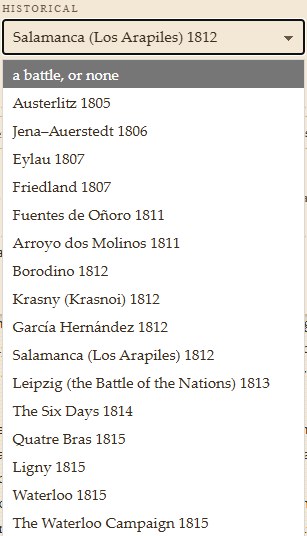
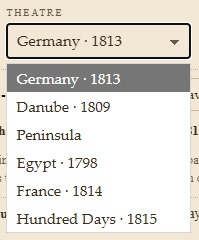
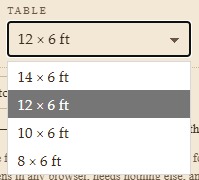

The short answer
Save it, then send it
Every scenario you generate can be saved as one finished file — the staff map, both orders of battle, objectives and victory conditions already drawn into it. Three things follow from that, in order.
- Save it
- The saved file is the finished battle, not a set of instructions for building one. It opens in any browser, needs nothing else installed, and will not change. That’s what to send a friend or the club, and it’s named for the battle — The Action at Niederfeld.html, say — so it’s obvious what it is when it lands in someone’s inbox.
- A code rebuilds it
- A generated scenario also carries a short code. Paste that into a copy of the app and it builds the battle again from scratch, using whatever choices and tables that copy of the app currently has. The sixteen historical battles work differently: a battle’s code is its own name, so it finds that same battle on any copy that has it. What gets printed for it can still change as the research improves, so if it matters that the sheet itself doesn’t change, save that one too.
- So share the file, not the code
- The same code can build two different battles on two different copies of the app. A saved file can’t do that — it’s already built. Save it, then send it, and everyone at the table is looking at the same battle.
The longer answer
Why a code can drift and a file can’t
A code is short because it isn’t the battle — it’s the handful of choices the battle was built from: the theatre, the table size, and a phrase to start from. That is why it looks like GE12-SAXONY-1813-9F4C3 — Germany, a twelve-foot table, and the phrase. Note it down and type it in later, and your copy of the app builds that battle for you again.
A code is for finding a battle again yourself, not for handing it on. To give a battle to a friend, an opponent or the club, use Save to send and pass on the file: everyone who opens it has exactly the same scenario.
Building the actual battle from that code is done fresh every time the code is pasted in, by whichever copy of the app does the pasting. As the app is developed — a theatre added, a choice reordered, a new kind of scenario given a chance to come up — the same code can lead to a different battle than it did before, because it’s built by whatever the app does today, not by what it did when the code was first generated.
We’ve watched that happen: the same code building a different battle once the app had moved on. It isn’t a defect; it’s the ordinary cost of a program that keeps being improved, and it’s exactly why a code is a recipe and a saved file is a record. Keep the record when it matters that the battle doesn’t move.
Built from the sources, checked as it’s built
What a Vedette scenario carries with it
This is the part a printed scenario book can’t do: show its own working, on the sheet, for you to check.
- Sourced, not invented
- The sixteen historical battles are built from the published orders of battle and the histories, and every sheet names what it stands on — to the page, where the source has pages. A generated scenario is not a real action, so there is no history to cite for it: its forces are built to the standard strengths of that army in that year and theatre — so what you field is what a division of that army looked like. Either way, where the record has a gap the same standard strength fills it rather than a guess dressed up as one, so every unit still plays.
- Fitted to your table
- You say how big the table is. The scenario is cut to fit it, not the other way round.
- The working shown, not just the verdict
- Balance isn’t a single number handed down from nowhere. The sheet gives you the odds, then says in plain words what actually decides the fight — who holds the ground, who has the weight of numbers, who has to attack across the open, whose command is divided. Reasons you can argue with, rather than a score you have to take on faith.
- Reasons on the sheet, not just rules
- Reinforcement timing, deployment order, special rules — each is tied to the specific action it describes, with an umpire’s note saying what it’s for. Nothing generic, bolted on because a template needed filling.
None of that changes because of what this page is about. A generated battle is built afresh every time; a saved one is built once and kept exactly as it was. Generate the battles you want to try, and save the ones you want to keep.
The affairs of the nations
Europe redrawn, print by print
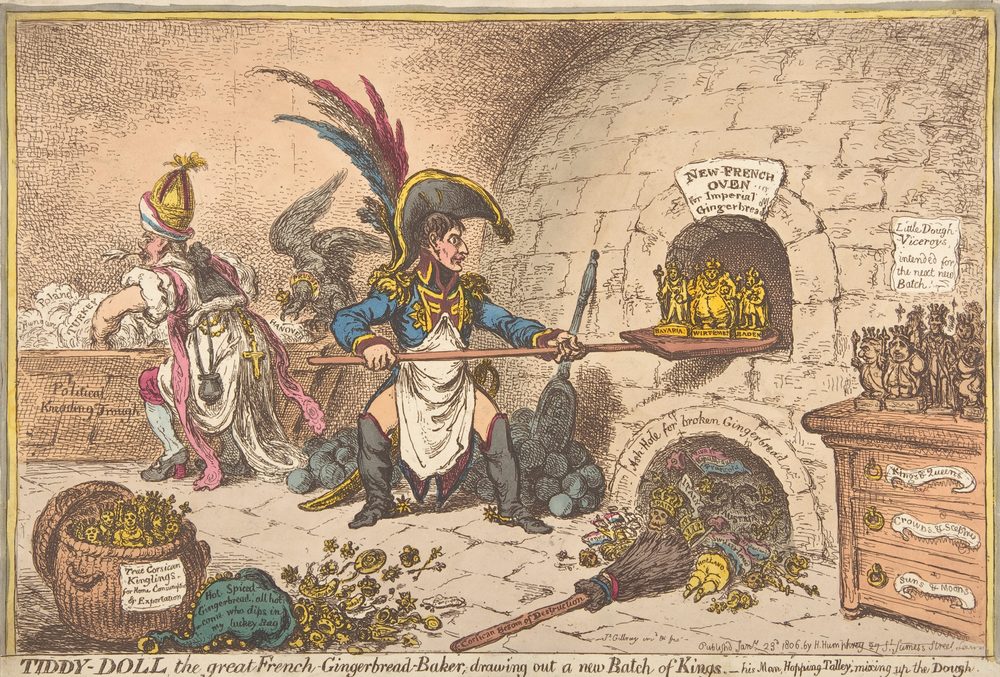
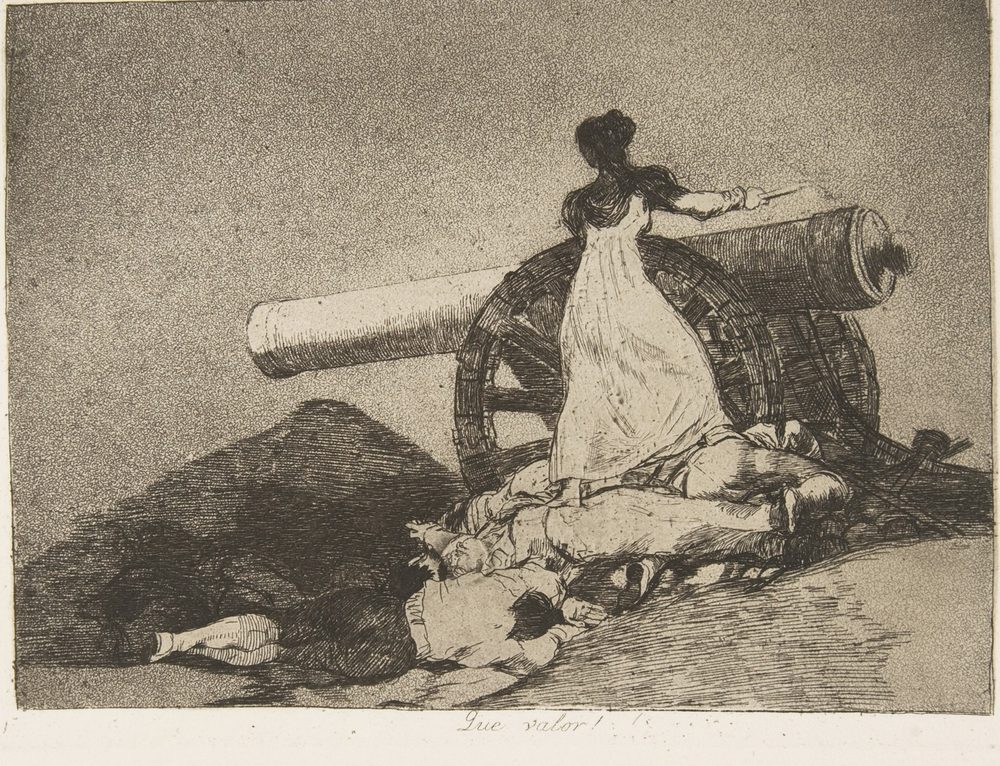
Between 1798 and 1815 the map of Europe was redrawn again and again, one broken kingdom at a time — and the print-sellers of the day sold the story as fast as it happened. One print mocks Napoleon baking a fresh batch of kings from the oven, Bavaria and Württemberg and Baden still warm, the broken ones swept into the ash-hole below. Another shows a woman climbing over her own side’s dead gunners to fire the last working cannon herself — loss, defiance and hope held in the same print, nothing invented. The scenarios stand on the same ground — the Peninsula of 1808, the Danube of 1809, Germany in 1813, the Hundred Days — and every sheet says which sources it stands on.
The period in its own pictures
Cavalry against the squares
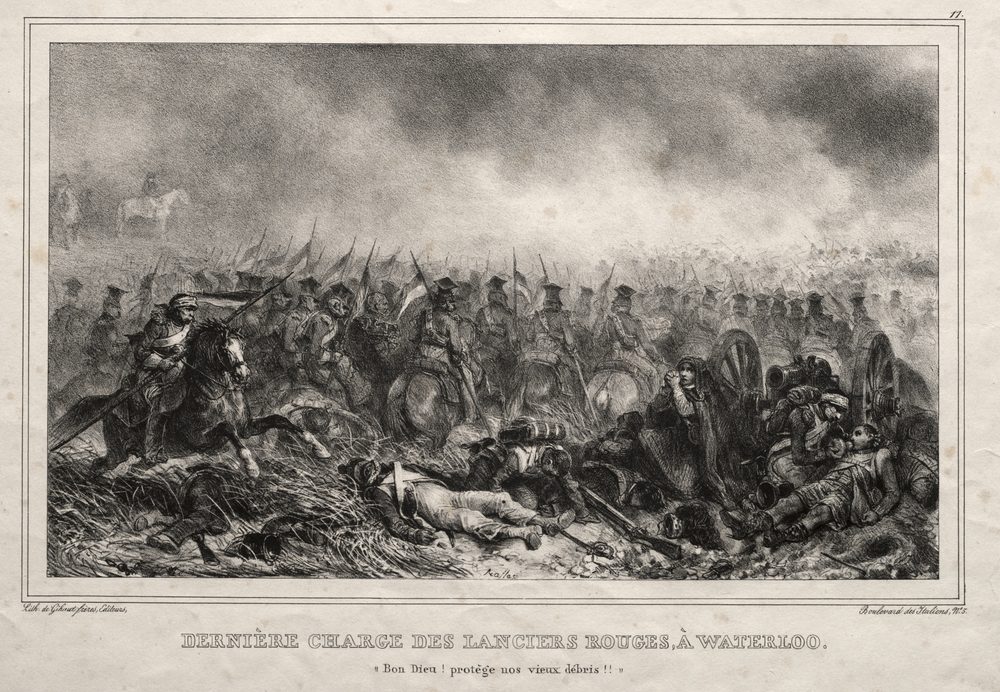
Look at the print below. The lancers go in at the gallop, one more charge into smoke that never clears — and in the same frame, feet away, a woman kneels over the wounded and the dead, an overturned caisson beside her. The words underneath aren’t a cheer. They’re a prayer: Bon Dieu, protège nos vieux débris — God, watch over what’s left of us. That’s not glory. That’s men worn past the end of themselves, going in anyway because there’s nothing left to do but go in. Pain and loss and a kind of hope, all in the same picture. It’s the choice every scenario in the box hands a player, from the first turn.